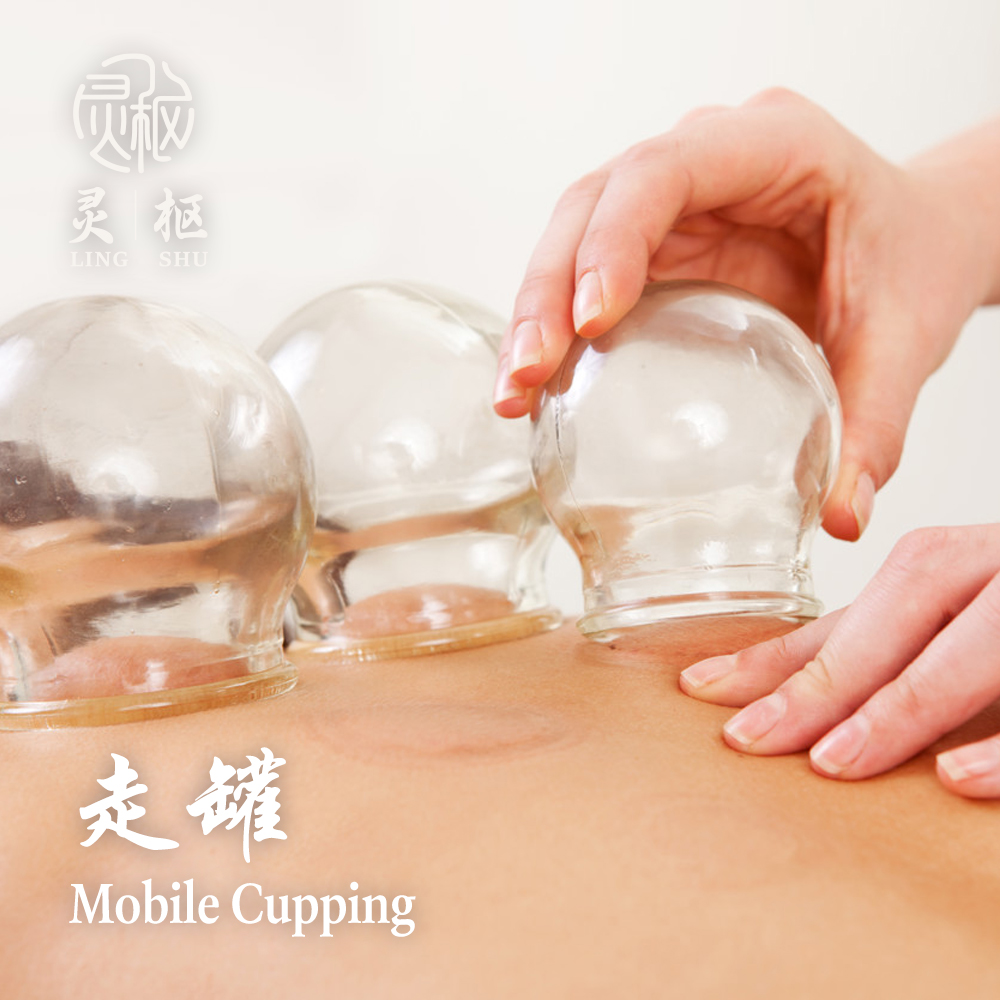
The difference between this and ordinary cupping is that you do not lie still. The cups stay on while you move, which is where the “functional” in the name comes from.
How a session is structured
The practitioner first watches you move, raising an arm, rotating the trunk, squatting, whatever the restricted movement happens to be, and notes where the range stops and what it feels like at the end of it.
Cups, usually soft silicone rather than glass, are then applied over the tissue thought to be limiting that movement. Suction is set moderately, so it can be held while the skin stretches. You then repeat the movement, slowly and under instruction, several times while the cups remain in place. The practitioner may reposition a cup between repetitions or move it slightly during one.
What you feel is a pulling drag that changes as you move, tighter at the end of range, easier coming back. It is more active and more tiring than static cupping, and people often describe it as feeling like a stretch happening from the outside in. The session usually ends by rechecking the same movement you started with.
Who it tends to suit
People whose complaint is restriction rather than pain at rest: a shoulder that will not lift comfortably overhead, a stiff upper back, a hip that limits squatting, or long-standing tightness that returns quickly after ordinary massage. It may help relieve muscular tension and is commonly used to support freer movement in a restricted area. It sits alongside physiotherapy and any prescribed rehabilitation, and is not a substitute for either.
How is progress judged?
By rechecking the same movement at every visit, not by how the area feels on the day. The movement you could not do comfortably at the first session becomes the measure, so a change is something you can see rather than something you have to remember. Treatment is normally given as a short course with a review, and the number of sessions is set at assessment.
Not appropriate where there is
- A recent or suspected fracture, dislocation, or an acute unassessed injury
- Recent surgery on the joint, or a joint replacement not yet cleared for loaded movement
- Joint hypermobility or instability, where more range is not the goal
- Anticoagulant use, or a bleeding or clotting disorder
- Fragile skin, open wounds, infection, eczema or sunburn over the area
- Deep vein thrombosis, or unexplained swelling in the limb
- Pregnancy
- New nerve symptoms, numbness, weakness, pins and needles down a limb, which need medical assessment first
The following day
Expect visible cup marks, usually lighter and more oval than static cupping leaves, fading over several days. A post-exercise style soreness is common because you have moved through range you had been avoiding. Keep moving gently, avoid a hard training session that evening, and stay out of hot baths and saunas for two hours after the treatment.
Fuller reading: TCM for pain relief at LS TCM and the Knowledge Centre on cupping.