
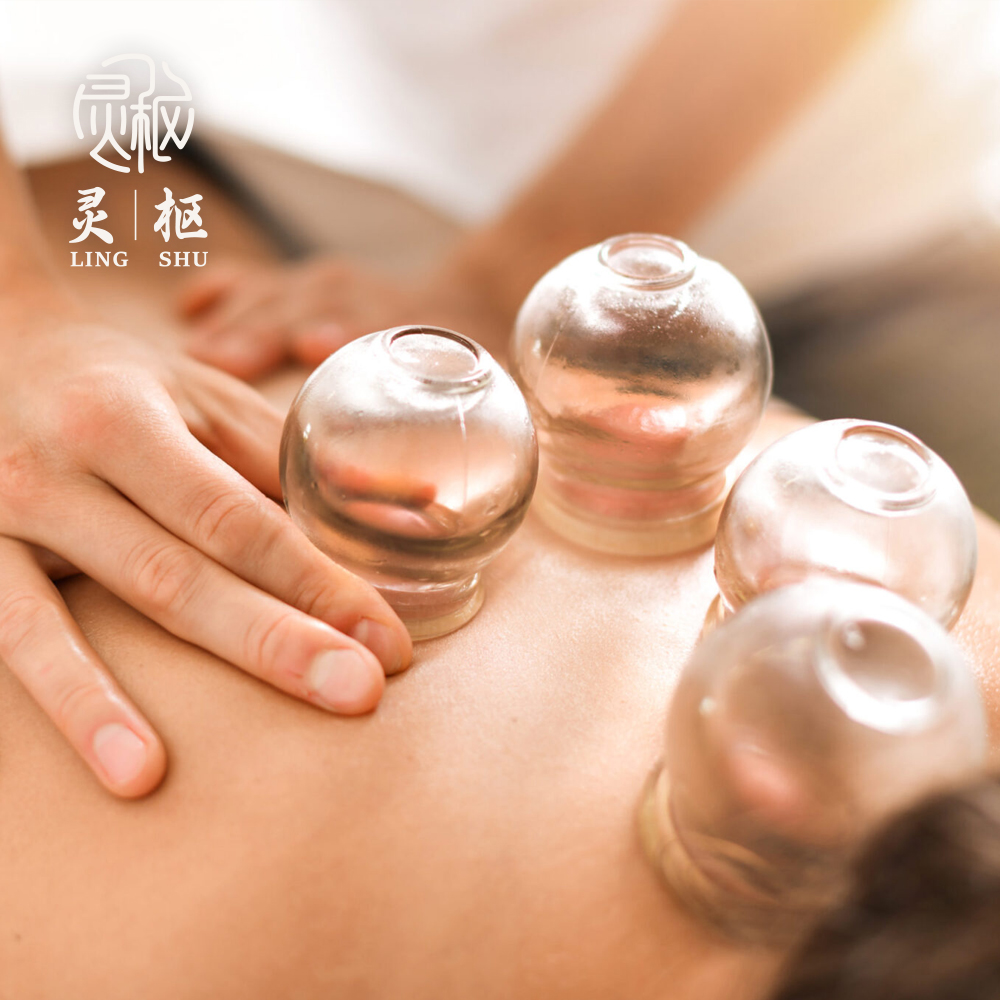
What is cupping?
Cupping is the application of suction cups to the skin, drawing the tissue upwards rather than pressing down into it. It is one of the oldest techniques in TCM and, thanks to the round marks it leaves, one of the most recognisable.
At LS TCM we use several forms of cupping and choose between them according to the area and the tissue. Fire cupping uses a glass cup and a brief flame to create the suction; the flame never touches you. Suction cupping uses a hand pump for fine control. Sliding cupping draws an oiled cup across a broad area, and flash cupping applies and releases cups quickly, leaving little marking. Wet cupping is used selectively and is explained fully before it is ever offered.
How cupping works
In TCM, pain and stiffness arise where qi and blood have stopped moving freely. Cupping moves that stagnation. The suction lifts the skin and the tissue beneath it, opens the pores and draws fresh blood into an area that has become dense and stuck, and with it draws out what the tradition describes as cold, damp and wind lodged in the channels.
The marks cupping leaves are part of the mechanism, not a side effect. They are stagnant blood drawn to the surface, where the body clears it, and practitioners read their colour as a guide to how long-standing the stagnation is.
What cupping is used for
Cupping is used at LS TCM mainly for musculoskeletal complaints and for the heavy, congested feeling across the upper back. People commonly come in with:
- Tight, aching upper back and shoulders from desk work and screen time
- Lower back stiffness, particularly the broad tightness that stretching does not reach
- Neck stiffness with restricted turning
- Aching that is worse in cold or damp weather, or after prolonged air conditioning
- Muscle heaviness between training sessions, and sports injury once the acute phase has passed
- Sciatic pain, with cups over the gluteal region
- A lingering tight chest and cough at the tail end of a cold
See our pain relief page for how cupping fits into treatment for each complaint.
What a session looks like
An appointment takes 30 to 60 minutes, with the cupping itself usually taking ten to twenty minutes within it.
Your practitioner assesses the area first, pressing along the muscles to find where the tissue is dense and stuck. You lie face down with the area exposed and the rest of you covered. She places the cups one at a time, and you feel the tissue lift under each one: a strong, steady pull rather than pressure, which most people find oddly satisfying. Static cups stay in place for five to fifteen minutes; sliding cupping is continuous and moves across the area for a few minutes.
The sensation should be firm but comfortable. If a cup feels too strong, say so and the suction is reduced straight away. Afterwards the area feels lighter, warmer and looser. Round marks appear where the cups sat and fade over three to seven days.
A course of treatment
Cupping is usually given weekly as part of a wider course, and the effect builds from session to session. Early on the relief is immediate but may ease off after a few days as the tissue returns to its old habits. Over the following sessions the tissue stays loose for longer, the marks come up lighter because there is less stagnation to draw out, and the stiffness that brought you in stops being the first thing you notice in the morning.
Your practitioner waits for the previous marks to fade before cupping the same area again, and adjusts pressure and placement at every visit. Once things are settled, many people return for an occasional session to keep the area moving.
Charges are given to you before treatment. You can pay by card, QR payment, cash or internet banking transfer.
Common questions
Does cupping hurt?
Why does cupping leave marks, and how long do they last?
Is it safe?
Can I shower after cupping?
Can I have cupping during pregnancy?
How often can I have cupping?
What does it cost? It depends on which treatments are involved and how long the session runs. Message us on WhatsApp with what you are coming about and we will tell you before you book.