
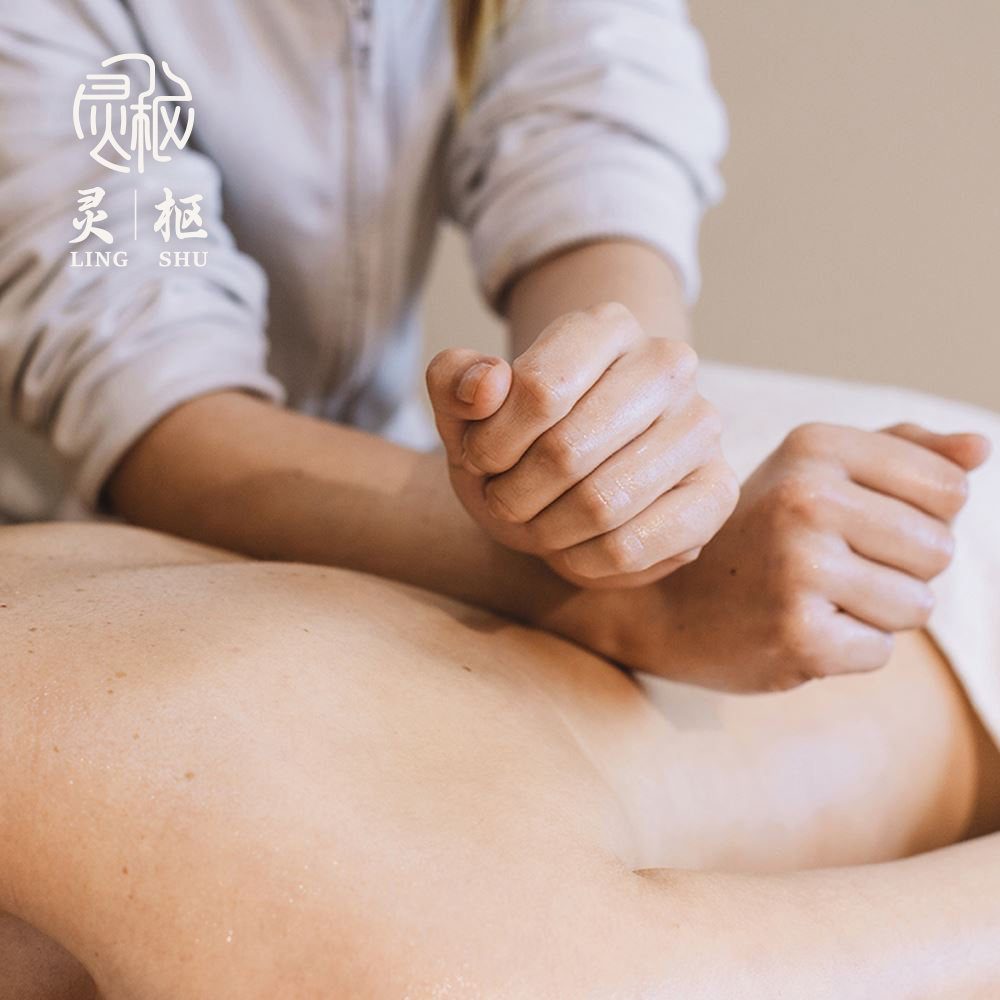
What is tui na?
Tui na (推拿) is the hands-on branch of TCM: a clinical manual therapy that works on muscles, joints and the acupuncture channels using pressing, kneading, rolling and mobilising techniques. The name means "push and grasp". It is treatment rather than pampering, though plenty of people fall asleep on the couch.
What sets tui na apart from a spa massage is that it is applied to a diagnosis. A session starts with an assessment and concentrates on the areas that assessment points to. If your problem is a stiff neck, most of the session may go on the neck, shoulders and upper back, and, if the pattern calls for it, on your forearm. Techniques range from rolling across large muscles to precise thumb pressure on points, plucking across taut bands, graded joint mobilisation without any sudden forceful thrust, and assisted stretching.
At LS TCM tui na takes three forms. Body tui na is the firm, targeted work most people picture, and it is what most patients come for: backs, necks, shoulders, hips and knees. Abdominal tui na (腹部推拿) is gentle, rhythmic work over the abdomen, used for sluggish digestion, bloating and period cramps. Head tui na (头部推拿) is fingertip work through the scalp, temples, base of the skull and neck, used for headaches, tension and sleep.
How tui na works
In TCM, pain and stiffness are qi and blood that have stopped moving. Strain, posture, cold and stress tighten the tissue, the channels running through it become blocked, and the area aches, stiffens and loses its range. Tui na moves the qi and blood directly: the practitioner's hands release the blockage, disperse the stagnation and restore movement to the channel, and the tissue softens and warms.
Because tui na works along the channels and not only over the sore muscle, it reaches the pattern behind the pain. A tight shoulder is often held by something further along the same channel, and working that point frees the shoulder more lastingly.
Abdominal tui na works on the same principle. In TCM the abdomen is where several channels converge and where the organ systems governing digestion and reproduction are addressed, so gentle, directed work there moves what has become stuck.
What tui na is used for
Tui na is used at LS TCM most often for musculoskeletal complaints, where it is frequently the mainstay of treatment, and in its abdominal and head forms for digestion, tension and cramping. Patients of any age or sex commonly come in with:
- Lower back stiffness and postural back pain, including from lifting and manual work
- Neck and shoulder tension from desk work, driving and phone use
- Frozen shoulder, which needs graded mobilisation in its stiff phase
- Sciatic pain, hip and knee stiffness, and sports injury once the acute phase has passed: running, gym, badminton, football
- Tension headache, migraine, jaw clenching and eye strain, with head tui na
- Bloating, sluggish digestion and period cramps, with abdominal tui na
- Difficulty falling asleep and the sense of carrying everything in the head and shoulders
See our pain relief and women's health pages for how each complaint is approached.
What a session looks like
An appointment takes 30 to 60 minutes including the assessment, first visit and follow-up alike.
Your practitioner asks what the problem is and what makes it better or worse, then she watches how you move and presses along the area to find what is tight and tender. You stay clothed for body and head work, so loose trousers and a T-shirt are ideal; gowns are provided. For abdominal tui na, only the abdomen is uncovered.
The work itself is firm and specific, with pressure varied from deep to very light according to what the tissue needs, and your practitioner checks it as she goes. Tui na is very often combined with acupuncture or cupping in the same appointment: a common sequence is tui na to soften and mobilise, then needling, then cups across the broader region.
Afterwards the area feels warm and loose. Some tenderness the next day, like after exercise, is normal and settles within a day or two.
A course of treatment
Tui na builds from session to session, so most people have a short course. Recent muscular problems commonly need three to six sessions, usually weekly; long-standing stiffness needs longer, and your practitioner agrees a review point with you at the start.
Over a course the change is steady and easy to feel. After the first session the area is looser for a day or two, then tightens again as old habits reassert themselves. By the third or fourth session the looseness lasts most of the week, movement has visibly improved, and the pain has moved from constant to occasional. Your practitioner adjusts the techniques as the tissue changes and often gives you stretches for home, which is how the gains hold once the course ends.
Charges are given to you before treatment. You can pay by card, QR payment, cash or internet banking transfer.
Common questions
Is tui na the same as a normal massage?
Does tui na hurt?
Is it safe?
Do I need to undress?
Do you treat men?
Can I have tui na while pregnant?
What does it cost? It depends on which treatments are involved and how long the session runs. Message us on WhatsApp with what you are coming about and we will tell you before you book.