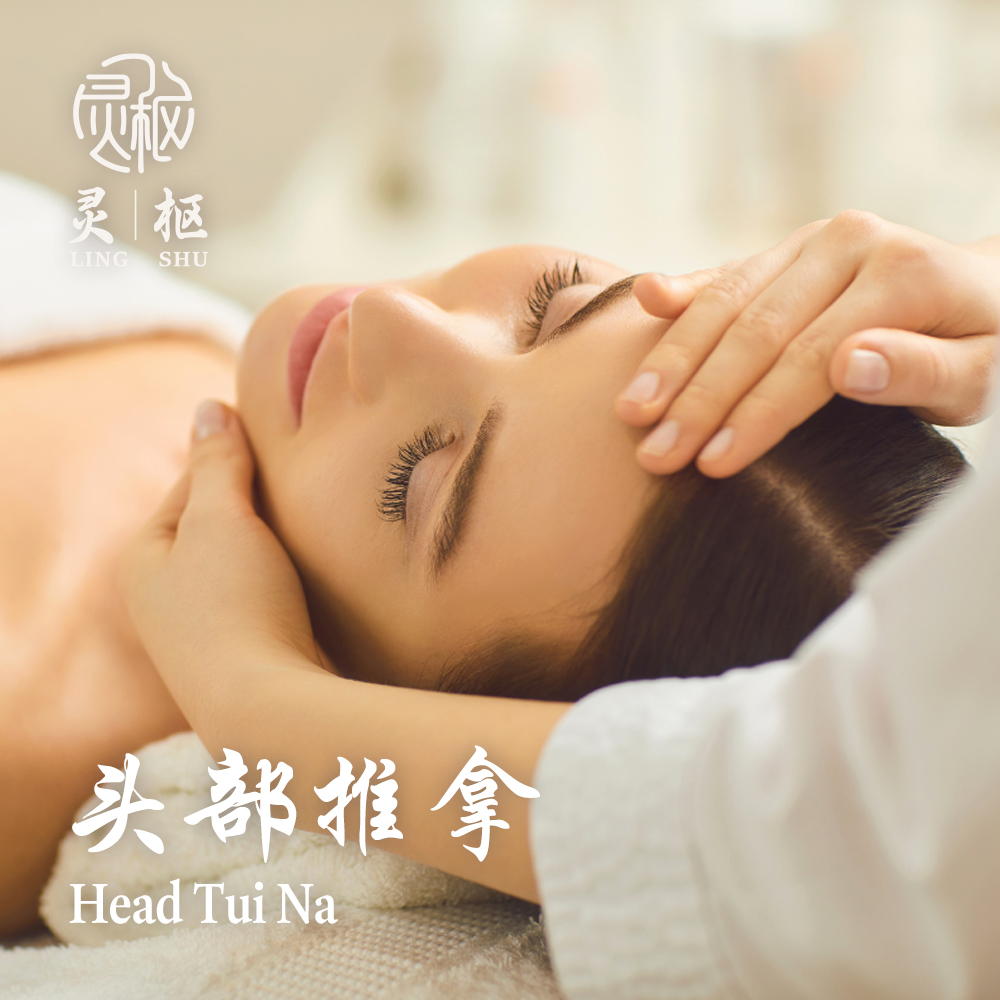
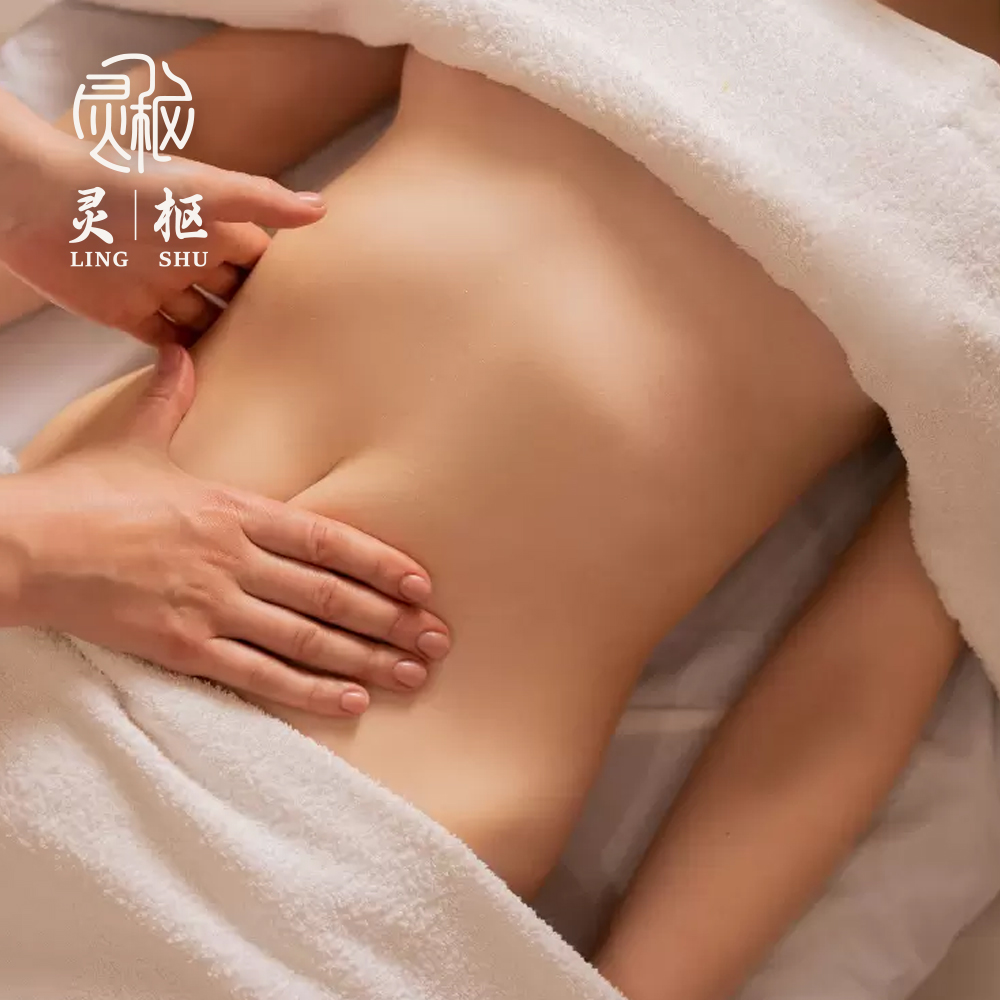
Head tui na treats the scalp, face and neck as one connected area, because the muscles that tighten around the jaw, temples and base of the skull rarely tighten alone.
The sequence of the session
You lie face up. Nothing is applied to the hair, so you leave without oil or product in it, worth knowing if you are coming from or going to work.
Work usually starts at the base of the skull, then moves up over the scalp with firm fingertip pressure and small raking movements. The temples and the line above the eyebrows are worked slowly.
Pressure is firm but not heavy. The common experience is a strong local ache under the thumb that fades within seconds of the pressure lifting, followed by an unusual lightness across the forehead. Some people find it makes them drowsy.
Reasons people book it
Tension-type tightness across the head, screen-related eye strain and brow tension, and difficulty settling at the end of the day. It may help relieve muscular tension around the head and is commonly used to support sleep quality.
A word of caution that matters here: headache is a symptom with many causes, and some of them need medical assessment. A headache that is sudden and severe, different from your usual pattern, accompanied by fever, neck stiffness, visual loss, weakness or confusion, or one that follows a head injury, needs a doctor first.
How often would I come?
Where the driver is postural or habitual, desk work, clenching, broken sleep, sessions are usually repeated over some weeks while the habit itself is worked on, then spaced further apart. Frequency is decided at assessment and revisited as things change, because treating the tightness without changing what causes it simply brings you back.
Not suitable if
- You have had a recent head or neck injury, or any whiplash not yet medically assessed
- There is scalp infection, dermatitis, open or weeping skin, or recent scalp surgery
- You have had recent eye surgery, or acute sinusitis or ear infection
- You are taking anticoagulants or have a bleeding disorder. Tell the practitioner first
- You have unstable neck problems, cervical instability, or new nerve symptoms in the arms
- You are feverish or acutely unwell
Afterwards
A mild residual ache at the temples or jaw for a few hours is common, as is feeling notably sleepy. Occasionally people feel briefly light-headed on standing. Sit for a moment before getting up, drink water, and do not schedule anything demanding straight afterwards if you can avoid it.
Fuller reading: how tui na is used at LS TCM and the Knowledge Centre on TCM for pain.