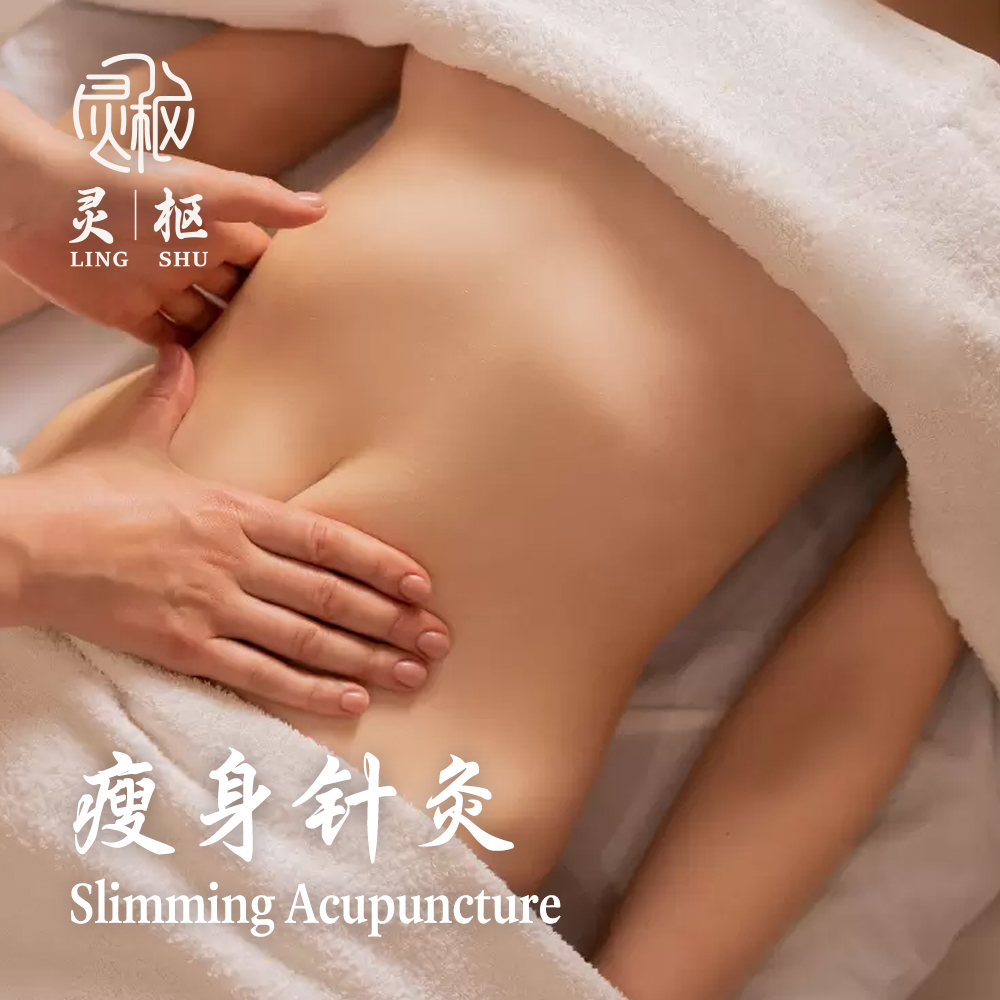
Read this first: acupuncture does not itself reduce body weight, and nothing here should be taken as a promise that it will. This session is offered as a support alongside diet and physical activity, not as an alternative to them.
What the session consists of
Assessment comes first, as with any acupuncture at the clinic, your digestion, appetite pattern, sleep, energy through the day, stress, and for women the menstrual cycle. Points are then chosen from that assessment, not from a fixed protocol.
You lie on a treatment couch with the abdomen and lower limbs accessible. Fine, sterile, single-use needles are inserted, most commonly around the abdomen and on the lower legs and forearms. Insertion feels like a brief prick followed by a dull, spreading heaviness. The needles are then left in place while you rest, and the practitioner checks on you during that time. Removal is quick.
Auricular (ear) points or press-seeds are sometimes used as part of this work. Where they are, the practitioner explains what they are, how long to keep them on and what to do if one becomes sore, and tells you what they cost before they are applied.
What it is and is not for
In TCM theory, treatment here is directed at patterns involving digestion, fluid metabolism and energy, so it may help relieve bloating and abdominal discomfort, and is commonly used to support appetite regularity, digestive comfort and sleep. Those are the honest limits of what is claimed.
It is not a weight-loss treatment, a body-contouring treatment, or a substitute for medical, dietetic or exercise advice. If body weight is a health concern for you, that conversation belongs with your doctor or a registered dietitian, and this treatment sits alongside their plan rather than replacing it. Anyone with an eating disorder, or with a history of one, should not use acupuncture as part of weight management and is asked to say so at assessment.
How is this reviewed?
Against the symptoms it was aimed at, bloating, appetite pattern, digestive comfort, sleep, and not against a number on a scale. Where this treatment is used at all it is used as a course over some weeks, with the number of sessions set at assessment. If those symptoms have not changed, the practitioner should say so rather than extend the course.
Who should not have this
- Anyone with a current or past eating disorder, or disordered eating patterns
- Pregnancy, or if you may be pregnant, abdominal points are avoided
- Anticoagulant use, or any bleeding or clotting disorder
- Recent abdominal surgery, hernia, or an IUD recently fitted
- Unintentional weight loss, which needs medical investigation rather than TCM treatment
- A pacemaker or implanted electrical device, where electro-stimulation would be used
- Broken or infected skin at the points, fever, or acute illness
- A history of fainting during needling
Afterwards
Small bruises at needle sites, mild tiredness or a relaxed, heavy feeling for a few hours are all normal. Eat normally afterwards, this treatment is not a reason to skip a meal, drink water, and avoid alcohol and hard training that evening.
Fuller reading: how acupuncture is used at LS TCM and the Knowledge Centre on acupuncture.