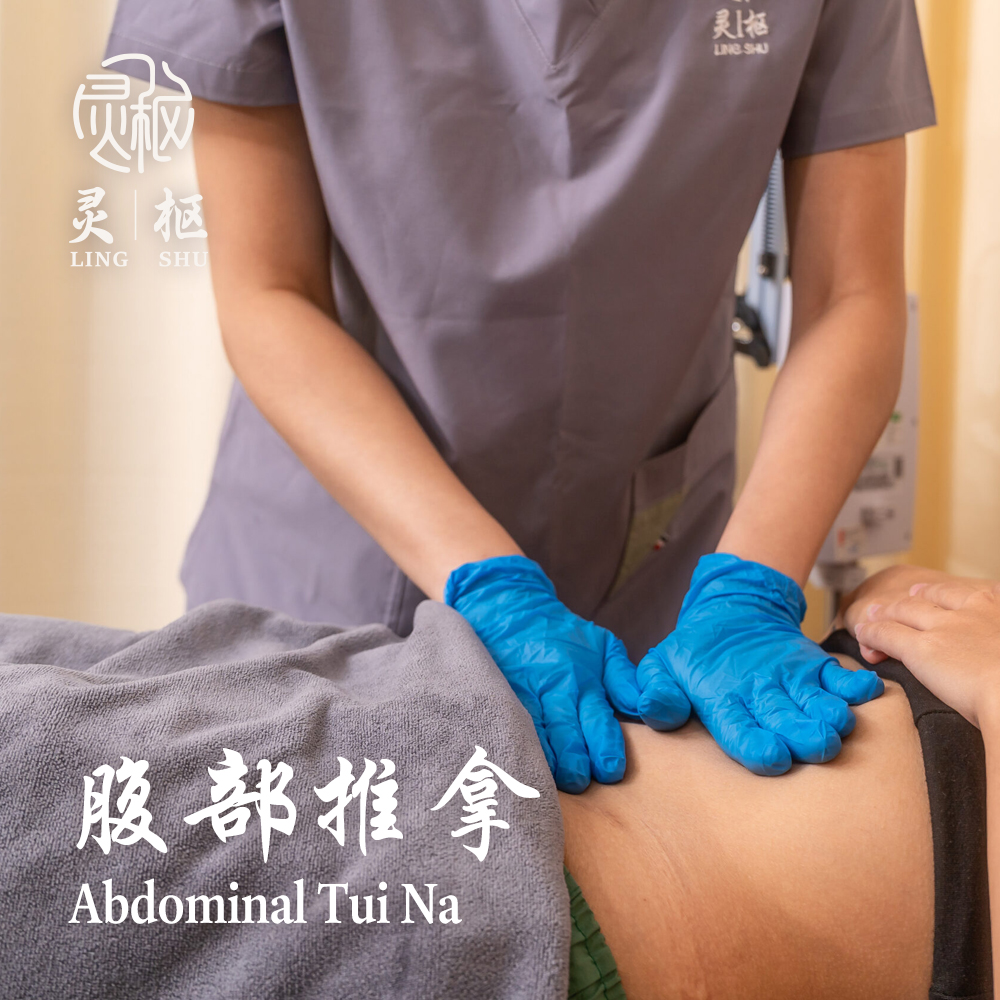
Abdominal tui na is worked over the belly rather than the back, and the pace and pressure are entirely different from tui na elsewhere on the body.
How the session runs
You lie on your back with knees supported so the abdominal wall is soft. The abdomen is exposed and draped, with the rest of you covered. Come having eaten lightly rather than fully, an hour or two after a meal is easier than straight after one.
The practitioner begins with flat, warm palm circles to let the muscles settle, then moves to slower work: kneading with the fingertips along the line of the large intestine, sustained pressure held at points around the navel and lower abdomen, and gentle lifting or rocking of the tissue. The pressure builds as you exhale and eases as you breathe in, so the whole session tends to follow your breathing.
It is normal for the abdomen to gurgle audibly during treatment, and for tender spots to appear that you did not know were there. Tenderness that is dull and eases under the hand is expected; sharp pain is not, and you should say so immediately.
What it tends to be booked for
Sluggish or irregular bowels, persistent bloating, a sense of fullness or tightness in the belly, and cycle-related lower abdominal discomfort. In TCM theory the abdomen is where several channels converge, so the work is also used as part of a broader plan rather than for the abdomen alone. It may help relieve abdominal tension and is commonly used to support digestive comfort. Persistent digestive change deserves a medical assessment as well.
Is this a one-off treatment or a course?
Abdominal tui na is normally given as a short repeated course with a review rather than as a single visit, because the intended effect is on function rather than on one tight muscle, and function is judged over weeks. It is often combined with acupuncture or moxibustion in the same appointment. The number of sessions and the interval between them are set at assessment and revisited as you go.
Who should not have abdominal work
- Pregnancy, or if there is any chance you may be pregnant
- Recent abdominal or pelvic surgery, including caesarean section, until cleared by your doctor
- An IUD recently fitted, a hernia, or a known abdominal aortic aneurysm
- Acute abdominal pain, appendicitis-type pain, or an unexplained abdominal lump. See a doctor, not a clinic
- Active inflammatory bowel disease flare, or a known bowel obstruction
- Anticoagulant use, bleeding disorders, or fever and acute infection
- During heavy menstrual bleeding, unless the practitioner has advised otherwise
What to expect afterwards
A looser bowel movement within a day is common and expected. Some people feel mildly tender across the abdomen overnight, as after unaccustomed exercise. Keep meals light and warm for the rest of the day and drink water. Anything sharper than mild tenderness should be reported.
Fuller reading: how tui na is used at LS TCM and the Knowledge Centre on TCM and women’s health.