
Blog
What to Expect at Your First TCM Consultation in Cheras

Most people who book a first Traditional Chinese Medicine appointment are not nervous about the treatment. They are nervous about not knowing what happens. This article walks through a first consultation at our clinic in Taman Pertama, Cheras, from the moment you sit down to the moment you leave.
How long does a first TCM consultation take?
Allow about an hour. A consultation at LS TCM typically runs 30 to 60 minutes. A first visit sits towards the longer end, because it covers the discussion, the physical assessment, and the treatment itself if we go ahead on the day. Follow-up sessions are often the same amount of time, our practitioners will ask for detailed updates, pulsing and checking again to make sure we are up to date on patient's latest condition.
What happens first?
You will fill in a short health form, then sit down for a conversation. That conversation is the largest part of a first visit and it is doing real work, not small talk.
A TCM practitioner is trying to build what is called a pattern picture: a description of how your body is functioning as a whole, assembled from many small signals. That is why the questions range wider than you might expect.
The questions we usually ask
- The main complaint. When it started, what makes it better or worse, whether it moves, whether it is sharp or dull, and what time of day it is worst.
- Sleep. How easily you fall asleep, whether you wake, and at what time.
- Digestion. Appetite, bloating, bowel habits, whether cold or rich food affects you.
- Energy. Whether it dips at a particular time of day.
- Temperature. Whether you tend to feel cold, feel hot, or sweat easily, including at night.
- Menstrual cycle, if relevant. Length, regularity, flow, pain, clots, and any premenstrual symptoms.
- Stress and mood. Not as a psychological assessment, but because these genuinely affect sleep, digestion and muscle tension.
- Medical history and current medication.
If a question feels unrelated to your shoulder pain, it probably is not. Sleep quality, for instance, changes how muscular pain behaves, and how you respond to treatment.
Tongue and pulse: what is actually happening
Tongue and pulse assessment are traditional observation methods used to build a TCM pattern, and they take about two minutes in total.
The tongue. You will be asked to stick your tongue out briefly. The practitioner looks at its colour, shape, moisture, and the coating on the surface. It is worth avoiding coffee, strong tea, curry and anything brightly coloured for an hour or two beforehand, because these stain the tongue and make the observation less reliable. If you scrape your tongue as part of your oral hygiene, skip it on the morning of your appointment.
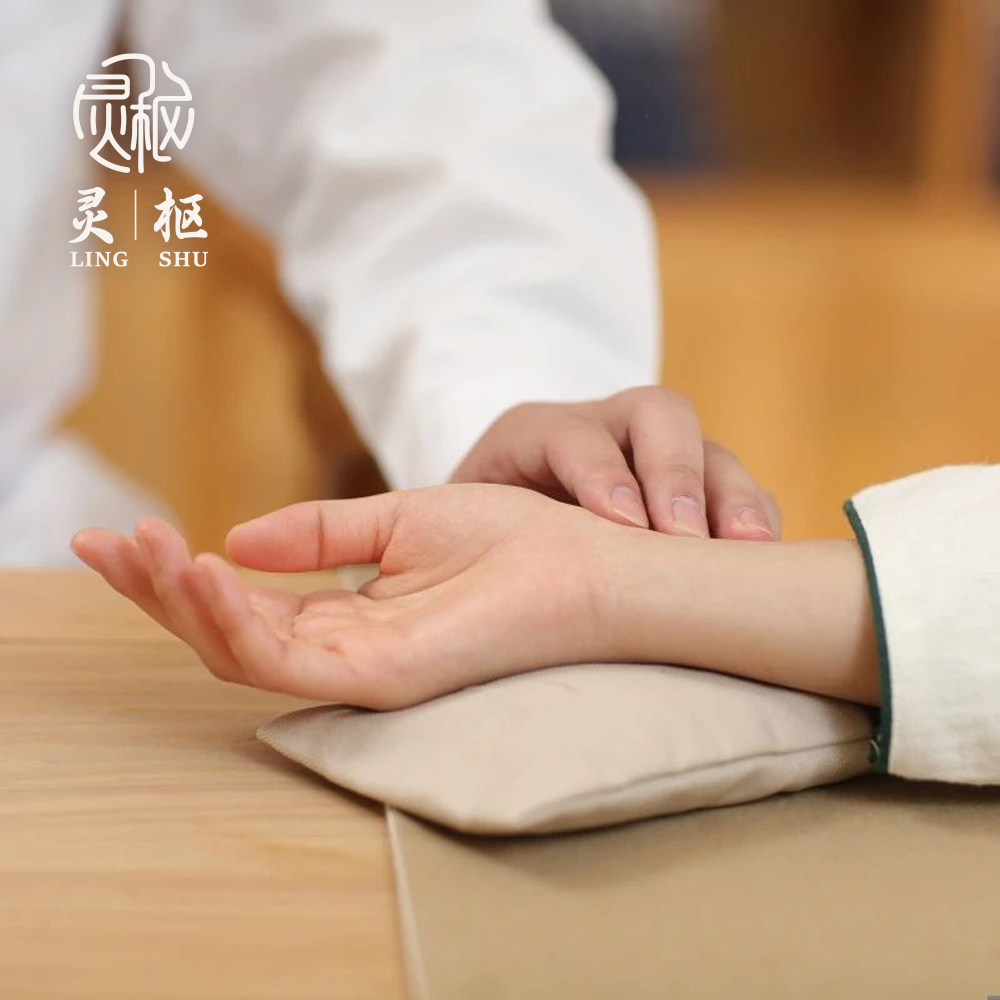
The pulse. The practitioner places three fingers on the radial artery at your wrist, on both sides, and feels for qualities such as depth, speed, strength and rhythm. This is not the same as taking your heart rate.
In TCM, tongue and pulse findings describe patterns such as heat, cold, dampness or blood stasis. Together with your answers, they guide your treatment plan. They are not a test for a specific medical disease, so if something in your history suggests you need blood tests or imaging, we will tell you.
Will I have treatment on the first visit?
Usually yes. In most cases we will discuss a plan and begin treatment during the same appointment, unless something in your history means we should wait for a medical opinion first.
Depending on what you have come in for, the first session may involve:
- Acupuncture. Fine single-use needles at selected points, left in place for around 20 to 30 minutes. If you are anxious about this, read our honest answer to whether acupuncture hurts before you come. You can find out more on our acupuncture treatment page.
- Cupping. Suction cups applied to the back, shoulders or legs. These commonly leave round marks for several days, which is normal and explained in our guide to what cupping marks mean.
- Tui na. A firm, structured form of Chinese manual therapy.
- Moxibustion or gua sha, in some cases.
- A Chinese herbal formula, prescribed and adjusted over time.
If herbs are prescribed, please read our guide on taking Chinese herbs alongside western medicine and tell your doctor and pharmacist what you are taking.
What should I bring and wear?
Bring three things: a list of your current medications and supplements, any recent test results or scan reports, and a note of your questions.
Medications matter. Herbal formulas can interact with prescription medicines, and some treatments need to be modified if you take anticoagulants. Photograph the boxes if that is easier than writing a list.
Wear loose clothing. Acupuncture points on the arms and legs are easier to reach if sleeves and trouser legs roll up comfortably. For back or shoulder treatment, a top that is easy to remove or lift helps. We provide towels and privacy.
Eat something first. Do not come on a completely empty stomach or straight after a very large meal. A light meal an hour or two before is ideal.
What to expect from treatment
Acupuncture has been studied for some chronic pain conditions, including migraine prevention and tension-type headache, and TCM is commonly used to support a much wider range of everyday complaints. Results vary from person to person.
We do not make claims about curing conditions, and under Malaysian law we cannot. What we can do is explain what a treatment is commonly used for, suggest a plan that suits you, and review progress with you as we go.
Booking a consultation
If you would like to talk through whether TCM is appropriate for your situation, you are welcome to call the clinic on +60 3-2385 5899 and ask. We are at 37G, Jalan 2/90, Taman Pertama, Cheras, 56100 Kuala Lumpur, and you can find directions and opening hours on our contact page.
To read more about our approach before booking, see our overview of Chinese TCM therapy, or browse the rest of our Understanding TCM articles. You are welcome to ask about our practitioners' registration and to see their registration certificates when you visit the clinic.
*Medical disclaimer: This article is for general information only and is not medical advice, diagnosis or treatment. If you take prescribed medication, tell both your doctor and your TCM practitioner.*
Frequently asked questions
How many sessions will I need?
It depends on what you have come in for and how long you have had it. After your first consultation, your practitioner will suggest a plan and explain how often to come in, and we review progress with you as we go. Results vary from person to person. If a longer course suits you, ask about our prepaid treatment packages.
Do I need a referral from my doctor?
No. You can book a TCM consultation directly. That said, if you are being treated for a medical condition, it is helpful to tell your doctor that you are seeing a TCM practitioner, particularly if herbal medicine is involved. Good communication in both directions is safer for you.
Can I come if I am already on medication?
Yes, and many of our patients are. Bring the full list. Some herbal formulas interact with prescription medicines, so we need to know exactly what you take before prescribing anything. Acupuncture and manual therapy also need adjusting if you take blood thinners.
Is the clinic open on Monday?
No. LS TCM is closed on Mondays. We are open Tuesday to Friday from 10.30am to 7.00pm, and Saturday and Sunday from 9.30am to 6.00pm.